Luxury Signature Real Estate Turkey
Choosing the right partner is as important as choosing the right investment. Luxury Signature is positioned as a trusted authority in real estate–backed citizenship solutions.
Learn how to buy property in Turkey step by step, including costs, residency, citizenship, and safest investment locations.
Buying property in Turkey in 2026 represents a strategic investment opportunity driven by a combination of affordability, strong demand fundamentals, and government-backed incentives. However, like any mature market, success depends on informed decision-making, proper asset selection, and a clear investment strategy.
The Turkish real estate market in 2026 is in a stabilization and recovery phase following a period of rapid price growth and macroeconomic adjustments. This phase is typically considered favorable for investors because:
From an investment cycle perspective, entering during recovery often allows investors to benefit from the next growth phase over the medium term (2026–2029).
Turkey offers relatively high rental yields compared to many European markets.
Average Rental Yields (2026 Estimates):
Key Drivers:
Beyond rental income, capital growth remains a core component of real estate investment in Turkey.
Growth Drivers:
Turkey remains one of the most accessible real estate markets globally in terms of entry price.


Comparative Advantage:
The Turkish real estate market is supported by multiple demand sources:
A population exceeding 85 million
Ongoing urban migration toward major cities
Strong interest from Middle Eastern, European, and Asian investors
Currency advantages for foreign buyers
Millions of annual visitors supporting short-term rental demand
These factors contribute to market liquidity and long-term stability.
Yes, foreigners can legally buy property in Turkey in 2026, and the legal framework remains one of the most open and investor-friendly among emerging real estate markets. Turkish property law allows international buyers to acquire residential, commercial, and land assets with full ownership rights, subject to clearly defined regulations and location-based restrictions.
Foreign nationals are permitted to purchase and own real estate in Turkey under the current property laws.
Key Legal Principles:

What Foreigners Can Buy:
There is no requirement to hold Turkish residency in order to purchase property.
Turkey allows property ownership for citizens of over 180 countries. This makes the market highly accessible to most foreign investors.
Restricted Nationalities
A limited number of nationalities are generally restricted from buying property, including:
Key Notes
Restrictions are not always absolute; in some cases, buyers can purchase property through:
While Turkey offers a liberal property regime, certain restrictions apply to ensure regulatory control and national security.
Maximum ownership: 30 hectares per individual
Foreigners cannot purchase property in:
Military zones
Security-restricted areas
Foreign ownership cannot exceed 10% of a district’s total land area
If purchasing land without construction:
A development project must be submitted within 2 years
Foreign investors typically purchase property under two structures:
Most common structure
Direct ownership under the buyer’s name
Full rights to sell, rent, or transfer
Available through a company registered in Turkey
Often used for commercial investments
Yes, foreign buyers can purchase property in Turkey without being physically present.
Note: All payments must be made through official bank transfers, and a currency exchange certificate is required to validate the transaction.

Buying property in Turkey in 2026 is a structured and relatively fast process when handled correctly. The legal framework is transparent, and transactions are completed through official government systems, ensuring security for foreign buyers.
Before starting the process, investors should clearly define their goal:
This step determines the location, property type, and budget strategy, which are critical for long-term returns.
Choosing the right asset is the most important decision in the entire process.
Key Factors to Evaluate:
Before committing, a legal and technical review of the property is essential.
Checks Include:
This step is often handled by a lawyer or professional advisor and is critical to avoid legal risks.
Foreign buyers must obtain a tax identification number from the Turkish tax office.
A Turkish bank account is required for:
For foreign buyers, a government-approved valuation report is mandatory.
Key Points:
The buyer transfers the peoperty price via bank transfer.
Requirements:
The final and most important step is the transfer of ownership at the Land Registry Office.
Process:
Once the Tapu is issued, the buyer becomes the legal owner.
After receiving the title deed, several administrative steps must be completed:

Understanding the full cost structure is essential for making a well-informed real estate investment in Turkey. While property prices remain competitive, buyers must account for transaction costs, taxes, and ongoing expenses to calculate the real return on investment.
In 2026, the total additional cost of buying property in Turkey typically ranges:
A practical rule used by investors is to budget an extra 5%–7% above the purchase price for a standard transaction
Legally, the cost is split between the buyer and the seller (2% each), but in practice, it is often fully paid by the buyer.
This is the largest and most important cost in the transaction.
Value Added Tax (VAT – KDV)
Property Valuation Report
Land Registry & Administrative Fees
Notary, Translation & Legal Fees
After purchase, owners should consider recurring expenses:
0.1% – 0.2% of the property’s tax value depending on location
Varies significantly depending on the building
Can range from basic fees to high costs in luxury complexes
DASK (Earthquake Insurance) is mandatory
Additional home insurance is optional but recommended
If the property is rented:
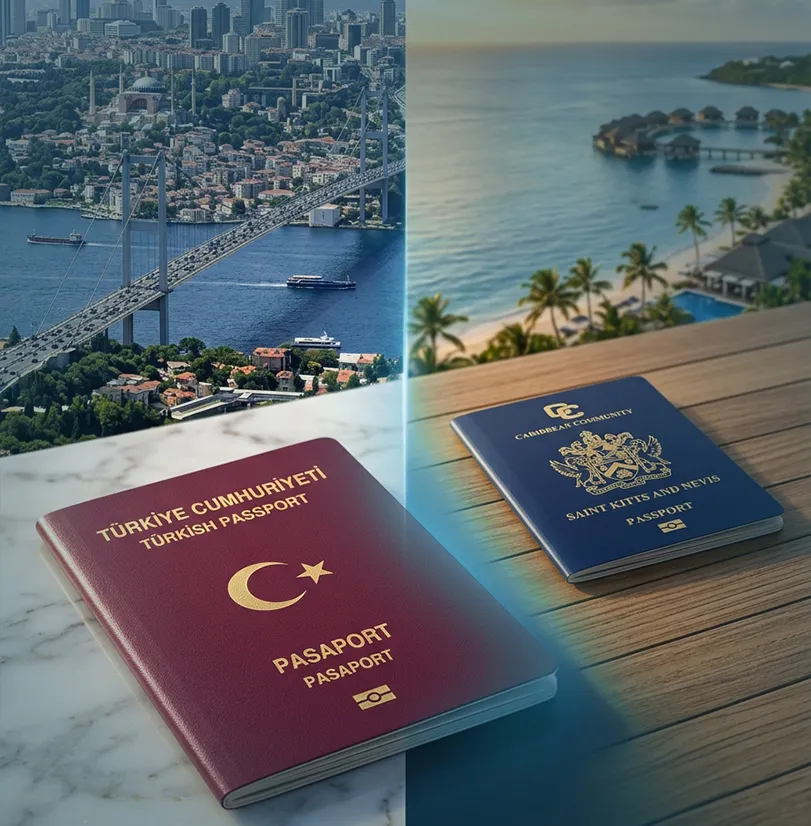
Foreign investors can obtain a Turkish residence permit by purchasing real estate, making it one of the most practical pathways for those who wish to live in Turkey legally without long-term visa limitations. This type of residency is commonly referred to as a short-term residence permit based on property ownership.
Key Requirements
Residential Property:
The property must be classified as residential (not commercial or land), as only residential units qualify for residency applications.
Minimum Property Value:
As of 2024, the minimum property value required to obtain a residence permit in Turkey is $200,000, and this requirement applies uniformly across all cities and regions, including Istanbul.
Ownership Registration:
The property must be officially registered in the buyer’s name through the Title Deed (Tapu), which serves as proof of ownership during the residency application process.
Renewable Legal Residency:
The residence permit is usually issued for one or two years and can be renewed as long as the ownership is maintained.
Right to Live in Turkey:
Investors and their families can legally reside in Turkey without the need for frequent visa renewals.
Access to Services:
Residency holders gain access to essential services such as healthcare, education, and the ability to open utility accounts and conduct daily transactions.

Turkey offers one of the most efficient citizenship-by-investment programs globally, allowing foreign investors to obtain a Turkish passport through real estate investment.
Turkish Passport:
Provides visa-free or visa-on-arrival access to numerous countries worldwide.
Family Inclusion:
The main applicant can include spouse and children under 18 within the same application.
No Residency Requirement:
Applicants are not required to live in Turkey before or after obtaining citizenship.
Dual Citizenship:
Turkey allows dual nationality, enabling investors to retain their original citizenship.
The citizenship process is relatively fast compared to global programs:
Estimated duration: 4 to 8 months
Includes property purchase, application submission, and final approval
Best Cities to Buy Property in Turkey 2026
Choosing the right city is a key factor in determining the success of your real estate investment. Each location in Turkey offers a different balance between rental income, capital appreciation, and lifestyle.
Istanbul
The economic and financial center of Turkey, offering the highest liquidity and long-term value growth. Ideal for investors seeking stable rental income and strong capital appreciation.
Bodrum
A premium coastal destination known for luxury villas and high-end living. Best suited for wealth preservation, lifestyle investment, and high-value assets.
Antalya
One of the top tourist cities, combining affordability with strong rental demand. Suitable for short-term rental income and holiday investments.

Despite strong opportunities, investors should approach the market with a professional and informed strategy.
Key Risks:
Risk Mitigation:
Understanding property types helps investors choose the right strategy.
New Build (Ready Property)
Resale Property
Off-Plan Property
Buying Property in Turkey in 2026: Complete Guide for Foreign Buyers, Residency, Citizenship & Costs
Apply Now

the spouse and children under 18 years old
retaining the original nationality, as Turkey allows dual citizenship
between Europe and Asia, offering a key advantage in business, trade, and education.




to more than 110 countries or with visa on arrival
for the U.S. E-2 Investor Visa, allowing holders to establish business in the USA.
citizenship programs in the world (approximately 3–6 months)
Years Of Experience
Properties Sold in Turkey
Citizenship Obtaining
Our Free Services

Yes, buying property in Turkey in 2026 is considered a strong investment opportunity due to competitive property prices, sustained local and international demand, ongoing infrastructure development, and government-supported incentives for investors. In addition, the Turkish real estate market is currently experiencing a stabilization and recovery phase, creating favorable conditions for investors seeking both capital appreciation and rental income over the medium and long term.
Turkey offers relatively attractive rental yields compared to many European markets. Average rental returns are estimated to range between 6% and 7.5% nationwide. In Istanbul, yields can reach between 6% and 8% depending on the district, while Antalya and Alanya often generate returns between 5% and 8%, especially for short-term holiday rentals driven by tourism demand.
The Turkish property market attracts foreign investors because it combines affordable entry prices, strong rental returns, long-term capital growth potential, and the opportunity to obtain Turkish residency or citizenship through real estate investment. Additionally, Turkey's strategic location, growing economy, and modern infrastructure contribute to its investment appeal.
Yes, foreigners can legally purchase property in Turkey in 2026. Turkish property laws allow international buyers to acquire residential, commercial, and certain land assets with full ownership rights, subject to specific regulations and location-based restrictions designed to protect national security and regulatory interests.
No, Turkish residency is not required to purchase property in Turkey. Foreign buyers can acquire real estate directly and later apply for a residence permit if they meet the necessary requirements. Property ownership itself can serve as a basis for obtaining a residence permit under certain conditions.
Foreign investors can purchase a wide range of real estate assets in Turkey, including apartments, residential units, villas, luxury homes, commercial properties such as offices and retail shops, and land plots that comply with Turkish development regulations and zoning requirements.
Yes, a limited number of nationalities are subject to restrictions on property ownership in Turkey. These restrictions may affect citizens of countries such as Syria, North Korea, Armenia, and Cuba. However, some cases may allow ownership through special legal approvals or Turkish-registered companies, depending on current regulations and diplomatic relations.s.
Under Turkish property law, an individual foreign buyer may own up to 30 hectares of land. This limitation helps maintain regulatory control over land ownership while allowing substantial investment opportunities for foreign investors.
Yes, foreign buyers can complete a property purchase in Turkey without physically being present in the country. This is typically done through a legally notarized Power of Attorney (POA), which authorizes a lawyer or legal representative to complete all necessary procedures on behalf of the buyer.
Foreign buyers generally need a valid passport, a Turkish tax identification number, a Turkish bank account, a government-approved property valuation report, biometric photographs, mandatory earthquake insurance (DASK), a sales contract, and a Power of Attorney if purchasing remotely. All financial transactions must also comply with official banking and currency conversion requirements.
The property purchase process typically involves defining your investment goals, selecting a suitable property, conducting legal due diligence, obtaining a Turkish tax number, opening a bank account, securing a valuation report, transferring funds, completing the title deed transfer, and finalizing post-purchase administrative procedures.
A standard property transaction in Turkey usually takes between 3 and 10 business days. The timeline depends on document preparation, valuation processing, banking procedures, and the scheduling of the title deed transfer appointment.
A Tapu is the official Turkish title deed issued by the Land Registry Office. It serves as the legal document proving ownership of a property and is required for all real estate transactions in Turkey.
The title deed transfer tax is 4% of the declared property value. Although Turkish law stipulates that the buyer and seller should each pay 2%, it is common practice for the buyer to cover the entire amount during the transaction.
Additional purchasing costs generally range from 4% to 7% of the property value for resale properties. For new-build properties, total costs may range from 10% to 25% or more if VAT is applicable. Investors are typically advised to budget an additional 5% to 7% above the purchase price.
VAT does not apply to resale properties. For new-build properties, VAT may range from 1% to 18% depending on the property's size and classification. Under certain conditions, foreign buyers may qualify for VAT exemptions when purchasing newly built properties.
To qualify for a residence permit through property ownership, the property must be residential and have a minimum value of $200,000. The property must also be officially registered in the applicant's name through the title deed.
Property-based residence permits are generally issued for one or two years and can be renewed as long as the applicant continues to own the qualifying residential property.
Yes, property-based residency allows investors and their immediate family members to legally reside in Turkey. Residency holders also gain access to healthcare services, educational institutions, utility registrations, and various day-to-day administrative services.
To qualify for Turkish citizenship through real estate investment, applicants must purchase one or more properties with a total value of at least $400,000. The investment must comply with all official citizenship program requirements.
The purchased property must be retained for a minimum of three years. During this period, the property cannot be sold, transferred, or otherwise disposed of, as this holding requirement is a key condition of the citizenship program.
The citizenship process typically takes between 4 and 8 months. This timeframe includes property acquisition, document preparation, application submission, government review, and final approval of the citizenship application.
Istanbul is widely considered the best city for long-term capital appreciation and market liquidity. Antalya and Alanya are popular for generating rental income due to their strong tourism sectors, while Bodrum is renowned for luxury real estate, wealth preservation, and premium lifestyle investments.
The primary risks include choosing the wrong location, overestimating rental returns, purchasing properties with legal or zoning issues, exposure to currency fluctuations, and working with unlicensed real estate agents or intermediaries. These factors can negatively affect profitability and long-term investment performance.
Investors can significantly reduce risk by conducting thorough legal and technical due diligence, verifying title deeds and permits, working with licensed real estate professionals and lawyers, and focusing on properties located in areas with proven rental demand and strong market fundamentals. Careful planning and professional guidance are essential for a successful investment strategy.




Choosing the right partner is as important as choosing the right investment. Luxury Signature is positioned as a trusted authority in real estate–backed citizenship solutions.
✔ 10+ years of experience in Turkish real estate & investment advisory
✔ Full legal supervision by licensed lawyers and official procedures
✔ Direct access to verified projects (no intermediaries, no inflated pricing)
✔ Absolute confidentiality and secure handling of sensitive information
✔ Official execution in your name with transparent documentation
As a specialized Turkish citizenship consultant, we do not sell passports — we structure compliant, asset-backed investments that protect capital and secure long-term value.
From property selection to final approval, our role as a citizenship by investment advisor in Turkey is to simplify complexity, eliminate risk, and deliver results.