
Real estate investment in Dubai
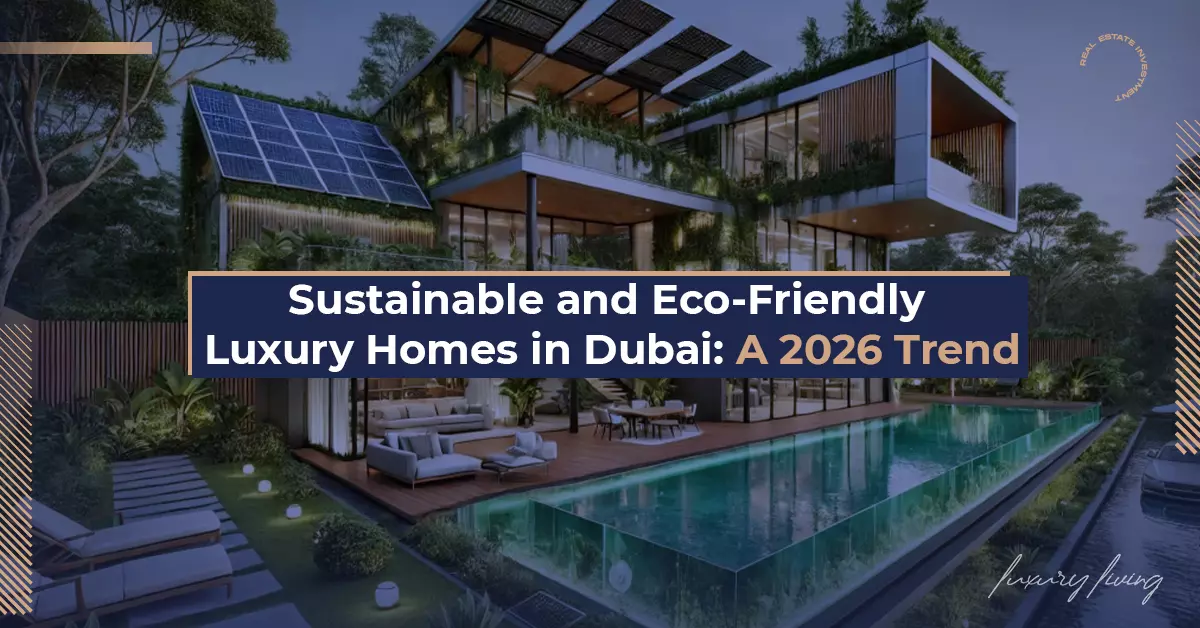
Sustainable and Eco-Friendly Luxury Homes in Dubai: A 2026 Trend
Font Size :
Table of Contents
- Introduction: The New Language of Luxury in Dubai
- Why Sustainable Luxury Homes Are Rising in Dubai in 2026
- Sustainability Is Now a Marker of Prestige, Not Compromise
- The Dubai Policy Context: Why Green Homes Are Becoming the Standard
- What Defines an Eco-Friendly Luxury Home in Dubai?
- The Investment Case: Why Green Luxury Homes May Hold Stronger Long-Term Value
- Where Sustainable Luxury Living Is Most Relevant in Dubai
- How Luxury Buyers Should Evaluate a Sustainable Home in Dubai
- BLOOM LUXURY SIGNATURE Perspective: Sustainable Homes as Legacy Assets
Introduction: The New Language of Luxury in Dubai
Dubai has always understood how to transform ambition into architecture. Yet in 2026, the most desirable homes in the emirate are no longer defined by scale alone. The new benchmark is quieter, more intelligent, and far more enduring: sustainable luxury. Private villas, branded residences, waterfront mansions, and high-end penthouses are increasingly judged by how gracefully they combine prestige with energy efficiency, wellness, smart technology, and long-term value.
For discerning buyers exploring luxury properties in Dubai, sustainability is becoming a signature of intelligent ownership. A home that reduces energy consumption, improves indoor air quality, conserves water, and aligns with Dubai’s green development agenda is not simply environmentally responsible. It is more comfortable, more resilient, and more attractive to the next generation of global wealth.
Dubai’s direction is supported by major sustainability frameworks, including the Dubai 2040 Urban Master Plan, the Dubai Clean Energy Strategy 2050, and the Al Sa’fat green building system. These initiatives reinforce a clear market signal: eco-friendly homes are moving from niche preference to premium expectation.
Why Sustainable Luxury Homes Are Rising in Dubai in 2026
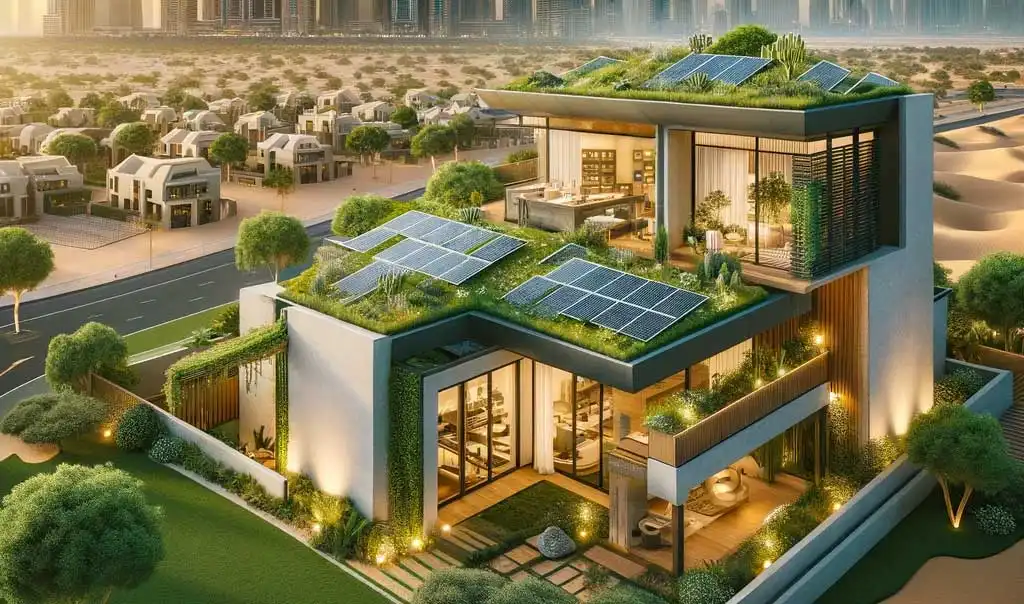
Sustainable and eco-friendly luxury homes in Dubai are rising because they answer three priorities at once: lifestyle, investment security, and regulatory future-proofing. High-net-worth buyers increasingly want homes that feel exceptional today while remaining relevant in a world shaped by ESG standards, energy performance, and climate-conscious capital.
Dubai’s property market is also evolving beyond pure visual opulence. Buyers now look closely at operating costs, smart-home efficiency, air quality, privacy, community planning, mobility, and wellness infrastructure. In this environment, a solar-ready villa, an Al Sa’fat-aligned residence, or a smart waterfront home with advanced cooling and water-saving systems can command a stronger narrative than a conventional luxury property.
|
2026 Buyer Priority |
What It Means in Luxury Real Estate |
Why It Matters in Dubai |
|
Energy efficiency |
Advanced insulation, smart HVAC, solar integration, LED systems |
Cooling demand is a major lifestyle and operating-cost factor. |
|
Water conservation |
Low-flow fixtures, greywater reuse, smart irrigation |
Dubai’s climate makes responsible water use a premium feature. |
|
Wellness |
Natural light, low-VOC materials, air filtration, acoustic comfort |
Luxury buyers increasingly associate health with property value. |
|
Smart living |
AI-enabled building management, IoT controls, predictive maintenance |
Convenience and efficiency are now part of modern prestige. |
|
ESG alignment |
Green certification, lower emissions, future-proof ownership |
Investors increasingly value compliant, sustainable assets. |
Sustainability Is Now a Marker of Prestige, Not Compromise
For many years, eco-friendly design was misunderstood as minimal, austere, or less luxurious. Dubai’s 2026 luxury market has reversed that perception. Today, sustainability is expressed through refined materials, intelligent engineering, private wellness spaces, resort-style landscaping, and discreet technology.
A sustainable luxury villa may include marble and natural stone, but it will prioritize responsibly sourced finishes and low-emission sealants. It may feature expansive glass, but the glazing will be high-performance and carefully oriented to reduce heat gain. It may offer lush landscaping, but the irrigation will be sensor-led and drought-conscious. The result is not less luxury; it is luxury with discipline, intelligence, and permanence.
This shift also strengthens E-E-A-T signals for real estate brands. Buyers want expert guidance, transparent explanations, credible market context, and property recommendations grounded in regulations rather than marketing language. In a market where every development claims exclusivity, verifiable sustainability becomes a trust signal.
The Dubai Policy Context: Why Green Homes Are Becoming the Standard
Dubai’s sustainability movement is not cosmetic. It is supported by city-level and national frameworks that influence development approvals, infrastructure planning, clean energy, and building performance. The Dubai Clean Energy Strategy 2050 aims to position Dubai as a global hub for clean energy and green economy leadership, while the Dubai 2040 Urban Master Plan emphasizes sustainable urban development and improved quality of life.
A key building-specific framework is Al Sa’fat, Dubai’s green building rating system. According to sector legal analysis, Dubai’s Green Building Regulations and Specifications became mandatory for all new developments in 2014, and Al Sa’fat introduced a structured rating system covering Bronze, Silver, Gold, and Platinum levels. Since 2020, new buildings in Dubai have generally been expected to meet at least the Silver level.
Answer for featured snippets: Sustainable luxury homes in Dubai are becoming a 2026 trend because government policy, buyer demand, smart-home innovation, and ESG investment standards are converging around energy-efficient, water-conscious, wellness-focused properties.
What Defines an Eco-Friendly Luxury Home in Dubai?
An eco-friendly luxury home in Dubai is not defined by one feature. It is an integrated residence where architecture, engineering, technology, materials, and community planning work together to reduce environmental impact while elevating comfort.
Energy-Efficient Architecture
The most advanced homes use orientation, shading, insulation, high-performance glazing, and efficient cooling systems to reduce energy demand. In Dubai, where climate-responsive design is essential, this is both a sustainability measure and a luxury comfort feature.
Smart Cooling and AI-Enabled Systems
Predictive HVAC, occupancy sensors, daylight-responsive lighting, and automated energy monitoring allow homes to adapt in real time. These systems reduce waste without requiring residents to compromise on comfort.
Water-Conscious Landscaping
Premium outdoor living remains essential in Dubai, but the best sustainable homes use native or drought-resistant planting, smart irrigation, water metering, and greywater systems where feasible. This preserves beauty while respecting the region’s environmental realities.
Healthier Interior Environments
Sustainable luxury increasingly includes low-VOC materials, superior ventilation, air purification, natural daylight, humidity management, and acoustic comfort. For families and international buyers, this health-led approach is becoming a major decision factor.
Responsible Materials and Long-Life Design
Eco-conscious luxury does not mean temporary trends. It favors durable materials, timeless architecture, lower embodied carbon where possible, and construction choices that reduce waste across the property lifecycle.
The Investment Case: Why Green Luxury Homes May Hold Stronger Long-Term Value
Sustainable luxury homes in Dubai are attractive because they align with the future direction of regulation, buyer expectations, and institutional capital. A property that already performs well on energy, water, indoor environmental quality, and compliance may require fewer costly upgrades later.
Industry commentary on Dubai green building regulations highlights that higher-performing green buildings may benefit from stronger rental appeal, higher resale confidence, improved financing access, and greater resilience against future regulatory changes. For international investors, this matters because the most desirable assets are not only beautiful; they are also easier to defend as long-term holdings.
|
Investment Advantage |
Practical Impact for Buyers |
|
Lower operating costs |
Efficient cooling, lighting, and water systems may reduce long-term utility exposure. |
|
Stronger tenant appeal |
Premium tenants increasingly value wellness, smart controls, and sustainability credentials. |
|
Future-proof compliance |
Properties built above minimum standards may face less retrofit pressure. |
|
Enhanced resale narrative |
A verified green home has a stronger value story for future buyers. |
|
ESG compatibility |
Sustainable real estate aligns with global wealth preservation and responsible investment goals. |
Where Sustainable Luxury Living Is Most Relevant in Dubai
Sustainable luxury can appear across Dubai’s most desirable residential formats. In waterfront districts, the focus may be on climate-conscious architecture, walkability, and cooling efficiency. In villa communities, the emphasis may be on solar readiness, private landscaping, smart irrigation, and wellness amenities. In branded residences, sustainability often appears through operational efficiency, indoor air quality, building management systems, and premium shared amenities.
Communities associated with smart infrastructure, green corridors, walkable planning, and future mobility will likely become increasingly desirable as Dubai continues to refine its urban model. For buyers, the key is not only to evaluate the residence itself, but also the master plan, service charges, maintenance quality, developer credibility, and long-term community management.
How Luxury Buyers Should Evaluate a Sustainable Home in Dubai
A sophisticated buyer should look beyond the word “eco-friendly” in a brochure. True sustainable luxury should be supported by documentation, performance features, and a credible ownership experience. The most important questions are whether the home has green certification, how cooling performance is managed, whether water-saving systems are installed, what materials were used, and how the property will be maintained over time.
Buyers should also ask whether smart systems are interoperable, whether the building management provider has a proven track record, and whether the home’s sustainability features are easy to operate. A luxury home should make sustainability feel effortless.
BLOOM LUXURY SIGNATURE Perspective: Sustainable Homes as Legacy Assets
For BLOOM LUXURY SIGNATURE, the rise of sustainable luxury in Dubai is not a passing aesthetic trend. It is part of a wider shift toward legacy ownership. The finest homes in 2026 are those that protect privacy, elevate wellbeing, preserve capital, and reflect the values of modern global families.
A sustainable luxury home is a statement of discernment. It says that the owner values beauty, but not waste; exclusivity, but not excess; innovation, but not inconvenience. In Dubai, this is precisely where the next chapter of luxury is being written.
Your next residence should be more than a destination. It should be a private sanctuary, a future-ready asset, and a refined expression of responsible luxury.
BLOOM LUXURY SIGNATURE invites you to discover Dubai’s most exceptional sustainable and eco-friendly luxury homes, curated with discretion, market insight, and uncompromising elegance.
BLOOM LUXURY SIGNATURE
Phone: 00971504738300
Email: info@bloomluxurysignature.com
Frequently asked questions
What are sustainable luxury homes in Dubai?
Sustainable luxury homes in Dubai are premium properties designed to reduce environmental impact while enhancing comfort. They often include energy-efficient cooling, smart-home systems, water-saving technology, healthier materials, and green building compliance.
Why are eco-friendly luxury homes a 2026 trend in Dubai?
Eco-friendly luxury homes are a 2026 trend because Dubai’s regulations, clean energy goals, ESG investment demand, and buyer expectations are increasingly focused on efficient, wellness-led, future-ready properties.
Do sustainable homes in Dubai cost more?
Sustainable homes may have higher upfront specifications, but they can offer long-term value through lower operating costs, stronger tenant appeal, better resale positioning, and reduced retrofit risk.
What features should I look for in an eco-friendly villa in Dubai?
Look for efficient HVAC, high-performance glazing, smart lighting, water-saving fixtures, greywater or irrigation systems, low-VOC materials, solar readiness, and credible green building certification.
Are sustainable luxury homes good investments in Dubai?
Yes, sustainable luxury homes can be strong investments when they combine prime location, credible development quality, efficient operations, wellness features, and compliance with Dubai’s green building direction.
What is Al Sa’fat in Dubai real estate?
Al Sa’fat is Dubai’s green building rating system. It assesses sustainability criteria such as energy efficiency, water conservation, materials, waste, ecology, and indoor environmental quality.