
Real Estate Blog
Construction Easement vs. Full Ownership Title Deeds in Turkey: Key Differences and How They Affect Your Purchase Decision
Font Size :
Table of Contents
- What Is the Difference Between Construction Easement and Full Ownership Deeds in Turkey?
- What Is a Construction Easement Deed in Turkey?
- What Is a Full Ownership Deed in Turkey?
- What Are the Practical Differences Between Construction Easement and Full Ownership?
- Comparison of Construction Easement and Full Ownership
- How Does the Occupancy Permit Relate to the Deed Type?
- Is Buying a Property with a Construction Easement in Turkey Safe?
- How Do You Read the Title Deed Before Buying an Apartment in Turkey?
- How Is a Construction Easement Converted into Full Ownership?
- How Does the Deed Type Affect Property Prices and Resale?
- Does a Construction Easement Affect a Mortgage Application?
- What Should You Check Before Buying Property in Turkey?
- What Should the Purchase Contract Clarify?
- Which Is Better for Living or Property Investment in Turkey?
- A Simple Example: How Do You Compare Two Offers?
- Choose Your Property in Turkey on a Clear Basis with Luxury Signature
When searching for property for sale in Turkey, most buyers focus on location, price, views and payment plans. Yet another document deserves just as much attention before you pay a deposit: the title deed, known in Turkey as the tapu.
You may find two apartments in the same area, with similar sizes and finishes, but one has a construction easement deed and the other a full ownership deed. This raises important questions: Is an apartment with a construction easement safe to buy? Does full ownership guarantee that a property has no problems? And how does the distinction relate to occupancy permits, financing and resale?
The answer begins with understanding what each type establishes, then examining the property’s actual status. The type of deed is an essential factor in a purchase decision, but it does not replace checks of the land registry, municipal records or the unit’s conformity with the approved project.
In this Luxury Signature guide, we explain the differences between construction easement and full ownership deeds in Turkey in practical terms, showing how this information can help you choose a property that suits your goals and budget.
What Is the Difference Between Construction Easement and Full Ownership Deeds in Turkey?
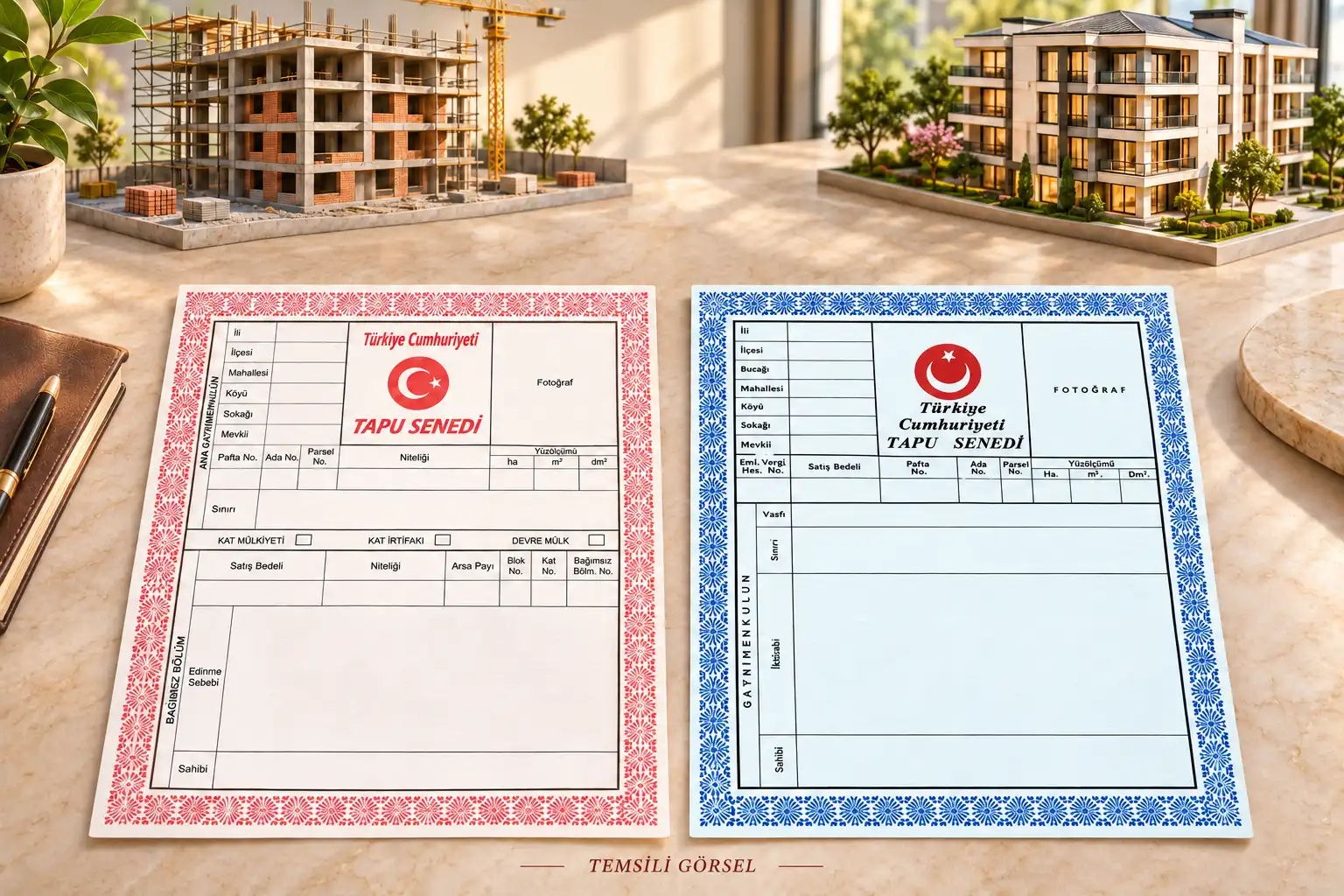
The main difference between Kat İrtifakı, or construction easement, and Kat Mülkiyeti, or full condominium ownership, is the legal status of the property unit. A construction easement records a land share linked to a right over a specific unit within a project, laying the groundwork for condominium ownership once construction is complete and the relevant requirements are met. Full ownership registers the independent unit together with its share of the land and common areas. Both can be the subject of a lawful purchase, but the checks required differ.
When buying property in Turkey, it is easy to become absorbed in the views, location and finishes, especially when looking for a luxury apartment in Istanbul or a villa in Bodrum. But a question worth asking before negotiating the price is: What exactly will I be buying legally, and what does the title deed establish?
Understanding the types of title deeds in Turkey does not require complicated language. You simply need to distinguish between registering your right to a unit, completing the building and obtaining permission to use it. These matters are connected, but they are not the same. Once you understand them, you can compare offers more accurately and recognise when an opportunity is suitable and when further investigation is necessary.
What Is a Construction Easement Deed in Turkey?
A construction easement is the legal registration of a share in a project’s land linked to a right over a specific unit in the approved plans. That unit may be an apartment, office or shop. The right is usually established before construction is complete, providing the basis for a subsequent transition to condominium ownership.
In simpler terms, this is more than ownership of an unspecified part of a plot. There should be an identifiable unit within the project, linked to a unit number, a land share and details that can be checked against the documents. This distinguishes a construction easement from buying an undivided land share without a registered right connected to a particular apartment.
If you are considering buying an apartment under construction in Turkey, encountering this form of registration is normal. However, that does not mean verbal reassurance is sufficient. You should verify the building permit, approved project, identity of the right holder and whether the offered unit matches the registered one.
It is also important to understand that a construction easement does not always mean the building remains under construction. The building may be complete, and an occupancy permit may even have been issued, while the registry has not yet been updated. In that situation, the reason the registration remains unchanged matters more than the name of the deed alone.
What Should You Know About the Registered Unit?
When reviewing the documents for a property with a construction easement, verify:
- The independent unit number, floor and block, where applicable.
- The land share associated with the unit.
- The unit’s designated use in the registration and project.
- Whether the offered unit matches the approved plans.
- The owner’s identity and the selling party’s authority to act.
Do not rely solely on the apartment number displayed on the door. Internal numbering may differ from the unit numbering in official documents.
Is a Construction Easement Merely a Promise to Sell?
No. A registered construction easement is a property right. It differs from a reservation agreement or a contractual promise to deliver an apartment in the future.
When buying an apartment under construction in Istanbul, therefore, ask clearly: Will the currently registered property right be transferred to you, or will you sign a contract providing for its transfer later? What conditions and deadlines apply?
The distinction affects how your rights are protected, and the two arrangements should not be treated as the same procedure.
What Is a Full Ownership Deed in Turkey?
“Full ownership deed” is a common term used in Arabic-language property discussions for the registration of condominium ownership. It means the unit is registered as an independently owned property, with an associated share in the land and rights in the common areas according to the documents and management plan.
“Full” does not mean you own the entire building or all its land. If you buy an apartment, you own that unit and the rights legally attached to it. Shared facilities, such as entrances and lifts, remain subject to the owners’ rights and obligations and the building’s management rules.
In the usual process for modern developments, condominium ownership is registered after construction is complete and the required documents, including the occupancy permit, are in place. This generally makes it suitable for buyers seeking a completed property with a clearer registration status, rather than waiting through construction and conversion stages.
Nevertheless, full ownership alone does not establish that a property is free from mortgages or attachments, guarantee construction quality, or rule out subsequent unauthorised alterations. Some older buildings may also have been registered through earlier regularisation procedures. Reviewing the basis of registration and the building documents therefore remains necessary even when the deed shows condominium ownership.
What Are the Practical Differences Between Construction Easement and Full Ownership?
The Nature of the Registered Right
With a construction easement, the right is linked to a land share and a particular unit in the project, in preparation for condominium registration. Full ownership records the unit as an independently owned property with its associated share of the land and common areas. This is the central legal distinction, rather than simply a different name for the document.
The Project Stage and Remaining Procedures
A construction easement may relate to a new development that still requires construction to be completed, an occupancy permit to be obtained and the registration to be updated. It may also relate to a completed building where an existing procedure needs to be followed up or a problem in the file resolved. With full ownership, conversion from easement to condominium ownership is no longer an outstanding step for the unit registered in that form.
The Scope of Pre-Purchase Checks
When buying a property with a construction easement, focus on the project’s ability to reach completion, existing documents, responsibility for obtaining the occupancy permit and, if the building is ready, the reason conversion has been delayed. With full ownership, attention shifts to registered restrictions, conformity with the documents, technical condition and financial obligations. Neither form is exempt from due diligence.
The Impact on the Investment Decision
A construction easement may suit a buyer willing to accept a waiting period and construction risks in exchange for a carefully assessed opportunity in a new development. Full ownership may suit a buyer who prefers earlier use and clearer registration. However, the deed type does not determine returns on its own; location, price, demand and operating costs also matter.
Comparison of Construction Easement and Full Ownership
| Point of comparison | Construction easement — Kat İrtifakı | Full ownership — Kat Mülkiyeti |
|---|---|---|
| Nature of the right | An easement linked to a land share and allocated to a unit in the project | Independent ownership of a unit in a completed building |
| When it is established | Before construction or while construction is incomplete | After construction is complete and registration requirements are met |
| What needs reviewing | The project, permits, construction progress, occupancy permit and conversion process | Current registry entries, conformity and any later alterations |
| What it establishes about occupancy permission | Does not, by itself, establish that an occupancy permit has been issued | Its establishment is linked to requirements that include occupancy permission |
| Suitability for purchase | Assessed according to the project’s status, documents and contract | Assessed according to the unit, building and registry status |
| Financing | Requires the bank’s assessment of the property and its documents | Also requires assessment by the bank and evaluation of the property |
| Resale | Affected by the clarity of the property’s status and ease of verification | A complete documentary file may make the position easier to explain to a buyer |
| Freedom from restrictions | Not established by deed type alone | Not established by deed type alone |
How Does the Occupancy Permit Relate to the Deed Type?
To understand the distinction between construction easement and full ownership, you need to distinguish three terms:
Building permit — Yapı Ruhsatı: Permission to carry out construction in accordance with the authorised conditions and project.
Building occupancy permit — Yapı Kullanma İzin Belgesi: Commonly called iskan, this concerns permission to use the building once the relevant requirements have been met.
Condominium ownership — Kat Mülkiyeti: The registration status of independent units in the land registry.
These documents and registrations are connected, but none substitutes for the others.
Does the Presence of Residents Mean an Occupancy Permit Has Been Issued?
Residents living in a building, a working lift, open shops, and functioning electricity and water supplies are all things you may observe during a viewing. On their own, however, they do not establish that an occupancy permit has been issued or that full ownership registration is complete.
Ask for the document and verify that it relates to the building or block containing your unit, particularly in large developments built in phases.
Does a Construction Easement Mean There Is No Occupancy Permit?
That cannot be concluded from the deed type alone. An occupancy permit may exist while the conversion has not yet appeared in the registry extract shown to you, or procedures may still need to be completed or updated.
What matters is establishing the current position with the competent authorities and the reason the registration remains an easement, rather than relying on a general verbal explanation.
Is Buying a Property with a Construction Easement in Turkey Safe?
Buying a property with a construction easement can be lawful and suitable, but the existence of the deed does not automatically make the purchase safe. Security comes from checking the project, restrictions and contract, and understanding outstanding obligations—not from a marketing statement such as “the title deed is ready.”
For a development under construction, review the building permit and approved plans, and ensure that the promised unit is the one associated with the registered right. Also examine the construction schedule, delivery dates, finishing specifications and arrangements for delays. The developer’s reputation is a supporting factor, not a substitute for documents.
For a completed building, the absence of full ownership should be explainable through clear documentation. There is a significant difference between a file that meets the conversion requirements and is awaiting registration, and a building affected by unresolved violations or other problems. The two properties may look similar during a viewing while presenting very different risks.
If you cannot obtain a documented explanation or access essential records, do not pay a non-refundable deposit before an independent review. A reservation agreement or payment receipt is also not equivalent to having the right registered in your name at the land registry, regardless of the wording used in the offer.
How Do You Read the Title Deed Before Buying an Apartment in Turkey?
Do not simply look for the words Kat İrtifakı or Kat Mülkiyeti. Connect the deed’s details to the property being offered and the current registry records.
1. Verify the Property’s Identity
Check the province, district, neighbourhood, parcel number and cadastral block number. The documents must refer to the property you actually viewed.
2. Match the Independent Unit
Verify the unit number, floor, block and registered designation. Check whether the unit is recorded as a dwelling, office or shop, because an advertisement does not change its official status.
3. Understand the Land Share
The land share represents the unit’s proportionate interest in the common land. It does not necessarily mean a specific piece of land that you can use exclusively.
When comparing similar units, ask for an explanation of any differences that require clarification.
4. Check Current Restrictions
An old copy of the title deed is insufficient to establish the current position. Mortgages, attachments, annotations and other restrictions affecting the transaction should be reviewed, with a clear arrangement for addressing them before ownership is transferred.
How Is a Construction Easement Converted into Full Ownership?
Under the usual process, conversion takes place once construction is complete and the conditions for condominium ownership have been met, based on the occupancy permit and approved documents. A legal mechanism allows the competent authorities to carry out conversion automatically when its requirements are satisfied. Depending on the case, the procedure may also be followed up through an application by a right holder.
It is therefore inaccurate to reduce the process to “the developer will change the paper later,” or to assume that fresh approval from every resident is always required. The first step is to establish the file’s status with the competent authority, then determine whether registration remains outstanding or an obstacle needs to be resolved.
Ask about the approved project, occupancy permit, unit details and management plan, and whether the required information has reached the land registry office. A file with complete documents is different from a project that has not obtained the necessary occupancy permission at all.
The time and cost of conversion should not be assumed from a general advertisement. Exemptions or different procedures may apply depending on the registration route, and expenses may arise from correcting deficiencies or violations. Request a written breakdown of responsibilities and potential amounts, keeping these separate from the costs of buying the property and transferring the right to the purchaser.
How Does the Deed Type Affect Property Prices and Resale?
A property under construction may be priced differently from a completed one, but this does not mean a construction easement guarantees a lower price. Prices may reflect the project stage, location, specifications or payment structure. Compare similar properties rather than treating deed type as the sole explanation for a price difference.
If a completed property is cheaper because it has not been converted to condominium ownership, the key question is whether the discount genuinely compensates for the costs and risks. A minor, resolvable deficiency is different from a structural problem or a violation preventing an occupancy permit from being issued, even if both discounts appear attractive.
On resale, condominium ownership and clear documentation may help buyers make decisions and reduce questions about outstanding procedures. They do not, however, guarantee a quick sale or a higher price. Local demand, the property’s condition and the asking price remain just as important.
A right registered under a construction easement can be sold under the applicable rules and procedures, subject to existing restrictions. However, a future buyer may request more extensive checks or negotiate the price if obligations are unclear. Organising the property’s documents from the outset therefore supports both your current purchase and your future exit strategy.
Does a Construction Easement Affect a Mortgage Application?
Full ownership does not guarantee loan approval, and a construction easement does not automatically mean financing will be refused. The bank’s decision depends on its lending policy, property valuation, the building’s status and occupancy permission, as well as the borrower’s eligibility, income and obligations.
A bank may finance a construction-easement property in a development that meets its criteria while rejecting a completed property with documentation or conformity problems. Even a property with full ownership may not secure the requested financing if the valuation or customer’s financial profile does not meet the bank’s conditions.
If a loan is essential to your budget, ask early for an assessment of financing availability for the specific property. Do not rely solely on the statement that “the development is mortgage-eligible,” particularly if you are a foreign buyer, as the financing terms available to you may differ from those offered to another purchaser.
What Should You Check Before Buying Property in Turkey?
Proper property due diligence starts with the documents and continues with the physical inspection. An old title-deed copy is not enough to establish the current position, because rights and restrictions can change. Ensure that up-to-date information is reviewed in coordination with the owner and a qualified professional.
The essential checklist includes:
- Registration type and right holder: Confirm the property’s registered status, the seller’s identity and authority to complete the transaction, or the validity of the power of attorney being used.
- Unit identification: Match the unit number, floor and position within the building against the project and documents. Do not rely on the door number alone.
- Mortgages, attachments and restrictions: Examine registered rights, their impact on the sale, and how any necessary releases will be completed before or as part of the transaction.
- Building permit and occupancy permission: Verify the documents and their scope. Completed finishes are not a substitute.
- Registered use: Confirm that the unit’s designation suits your purpose. Marketing it as an apartment does not remove the need to check its approved use.
- Appurtenances and common areas: Review the status of parking spaces, storage rooms, gardens and terraces, and whether they are allocated property, rights of use or shared areas.
- Technical condition and financial obligations: Arrange an inspection where needed, and review management dues, maintenance costs and other relevant obligations.
For luxury properties, details that appear secondary deserve particular attention. A promised parking space may be a management-regulated right of use rather than separately owned property. A garden in front of an apartment may be a common area that the buyer cannot freely alter. These details affect both the value of what you are buying and how you can use it.
You should also distinguish between gross and net floor areas and compare them on a consistent basis. Marketing photographs may create an impression of spaciousness, but a sound decision rests on documents and actual measurements rather than impressions alone.
What Should the Purchase Contract Clarify?
When buying an apartment under construction in Turkey, stating the unit number and price is not enough. Delivery dates, property specifications and agreed facilities should be clear, along with the obligations relating to occupancy permission and completion of registration, and who bears the associated costs.
If the building is complete but retains a construction easement, the agreement should explain why, identify the available documents and state who is responsible for following up the remaining steps. The phrase “full ownership will be obtained soon” does not, on its own, define an understandable obligation or explain the consequences of delay.
Also review payment and deposit terms, your rights if the sale cannot be completed, and how existing restrictions will be handled. A seller’s obligation to pursue a procedure is different from an obligation to achieve a result under specified conditions. That distinction requires legal wording suited to the case.
Remember that even a clear contract does not replace documentary checks or the required official procedures. An independent lawyer’s role is to review your rights and the transaction terms, while a property adviser helps you compare options, understand the market and negotiate an appropriate offer.
Which Is Better for Living or Property Investment in Turkey?
If You Want to Move In Soon
A completed property with condominium ownership and clear documentation will often be more suitable. It reduces the need to wait for construction and conversion, but restrictions, technical condition and management costs still need reviewing. Above all, verify the unit’s actual readiness rather than relying on the deed’s name.
If You Are Buying in a New Development
A construction easement may be suitable if the project documents are clear, the contract is properly structured and your ability to wait matches the construction schedule. Assess the opportunity according to price, location, project quality and risks. Do not assume that completion will inevitably produce a particular profit.
If You Want a Rental Property
Focus on permitted use, demand and operating costs alongside registration type. Net returns are not the same as advertised rent: vacancies, maintenance and management fees must be considered. If you plan short-term tourist rentals, check the specific requirements, because deed type alone does not authorise that activity.
For foreign buyers, eligibility to acquire property and restrictions linked to nationality and location remain separate aspects of due diligence. Likewise, deed type alone does not establish that a property qualifies for a residence or citizenship application; these objectives involve additional requirements and procedures.
A Simple Example: How Do You Compare Two Offers?
Suppose you are comparing two apartments in Istanbul. The first is in a modern development with a construction easement, clear documents and a specified delivery date. The second is ready and has full ownership, but requires maintenance and has higher management fees. This is an illustrative example, not a description of a particular property offer.
If you want to move within a short period, the second may be closer to your needs after maintenance costs are calculated and its documents checked. If your objective is a longer-term investment and you can wait, the first may deserve consideration, provided its price is appropriate and the risks are understood.
But if the first apartment is in a building completed some time ago, with no documented explanation for missing occupancy permission or stalled conversion, the comparison changes. It is no longer simply a choice between completed and off-plan property; it becomes an assessment of a legal or administrative obstacle that must be understood before commitment.
The practical takeaway is to choose a property that suits your objective after proper checks, rather than one whose deed has a more appealing label. Clear documents and obligations matter more than promises, and a good discount does not compensate for a risk whose limits you do not understand.
Choose Your Property in Turkey on a Clear Basis with Luxury Signature
Buying luxury property in Turkey brings together lifestyle, investment value and legal clarity. The right property offers more than an attractive view: it is an asset where you understand what you own, what you need to use it and which obligations you assume.
Contact the Luxury Signature team to discuss your goals and budget and explore property options in Istanbul and Bodrum. Explain whether you are looking for a ready-to-move-in home, a new development or a rental investment, and ask about the deed type and available documents from the outset. Compare your options clearly and arrange independent legal and technical reviews before committing, so you can move towards a purchase that meets your needs with greater confidence.

Frequently asked questions
Does a Construction Easement Establish My Right to the Property?
Yes. It establishes a registered right linked to a land share and a specific unit in the project, but it differs from condominium ownership registration for a completed unit. Verify that the right is registered in your name and the unit details match, because a reservation contract or payment receipt does not replace official registration.
Can an Apartment with a Construction Easement Be Sold in Turkey?
Yes. The registered right associated with it can be transferred through the legal procedures, subject to existing restrictions. However, the project’s status, occupancy permission and the reason conversion has not occurred may affect the buyer’s decision, financing options and the price they are willing to pay.
Can You Live in an Apartment with a Construction Easement?
The term “construction easement” alone does not answer that question. You must verify occupancy permission and the building’s status with the competent authority. Residents or functioning services do not remove the need to check the documents.
Does Full Ownership Guarantee That a Property Has No Problems?
No. It establishes condominium registration but does not replace checks for mortgages, attachments, conformity or technical condition. Later alterations, management dues and, where necessary, the registration basis of older buildings should also be reviewed.
Can You Obtain a Loan for a Property with a Construction Easement?
It may be possible, depending on the bank, property and borrower’s eligibility. Deed type does not create automatic approval, nor is there a blanket refusal for all construction-easement properties. Ask for a review of the particular property and financing terms before basing your purchase decision on a loan.
Which Is Better for a Foreign Buyer: Construction Easement or Full Ownership?
The choice depends on the purchase objective, project stage and soundness of the documentation. Full ownership may suit someone seeking a completed property, while a construction easement may suit a project under construction after appropriate checks. The buyer’s eligibility to acquire property and the transaction conditions must be reviewed separately.